Northumberland and the Farne Islands - Wildlife Photography Tour June/July 2026
For a quick look at 10 of my favourite photographs from the trip, click on the thumbnail below-centre.
For the story of the trip click on the thumbnails to open each gallery in turn.
Once you have opened the gallery, click on an image to see a larger version of it. You can then scroll through the rest of the gallery.
To get back to this page from an individual photo, click on the cross in the top right of the photo window, then click on the link next to the gallery title in the top left of the gallery window.
| Home Page |
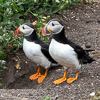 |
An arbitrary collection of 10 of my favourite photographs from this trip | ||
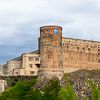 |
Day 1: Newcastle-upon-Tyne and Bamburgh I arrived in Newcastle the day prior to meeting the group, so I spent a pleasant morning wandering around various parts of the city and visiting a museum. After lunch I met most of the other members of the group, and our leader, outside the main railway station in Newcastle. We then drove to Bamburgh, which was to be our base for the trip. Having settled into our hotel and had an evening meal we drove to a location near Dunstanburgh Castle, a coastal ruin, where we spent some time experimenting with taking photos of plants and insects in the evening light, as well as of the Castle itself. |
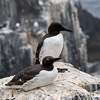 |
Day 2: Seahouses and the Farne Islands We were up before breakfast to seek out photo opportunities in the dawn light. We drove down the road towards Seahouses and it was not long before we encountered a barn owl out hunting, which we photographed both perched on a post and in flight. Shortly afterwards we encoutered a skylark preening on a post. Following breakfast we drove into Seahouses and took more photos before joining the first of two cruises we were to take to the Farne Islands that day. The first sailed close to various islands but we did not land. In the afternoon we took our second cruise, which landed us for an hour of photography on a rather misty Inner Farne. This was our first opportunity to take photos of seabirds up close. | |
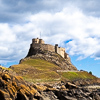 |
Day 3: Holy Island, Amble and Long Nanny We drove to Holy Island and parked up at The Snook, from where we took a walk to the dunes and the beach. We encountered many intersting plants, including four different species of orchid. From there we parked in the main car park and then walked a circular route in quite strong wind to take in various views of Lindisfarne Castle. After a late lunch we headed back to the hotel for a break before venturing to Amble, where we spent some time photographing terns over the Coquet River. We then headed off to a pub, where we had booked an early evening meal. The evening was spent at the Long Nanny Reserve. Here we spent the evening watching common and Arctic terns flying in from the sea with morsels for their chicks, who were hiding in the grass on the shoreline adjacent to the observation area. As the sun sank lower in the sky we started the long walk back to the car park and the drive back to Bamburgh. |
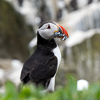 |
Day 4: A second pair of cruises to the Farne Islands After breakfast we headed once more to Seahouses for cruises to the Farne Islands. As for Day 2, we took the morning cruise round the islands and the afternoon cruise that landed us on Inner Farne for another hour of close proximity to many Guillemots and Puffins, along with Razorbills, Gulls, Shags and more battles with dive-bombing terns. This time the weather was bright and clear, providing excellent opportunities for photography. | |
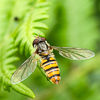 |
Day 5: A gentle return to Newcastle, stopping on the way We checked out of the hotel and started our drive south. We visited various reserves on the way including East Chevington and Druridge Pools. Most birds were out of range of even our longest lenses, but we were able to get close up and personal with insects and plants of varying species. We arrived at our hotel in Newcastle in time for an evening meal, before we went for a walk to the Tyne to observe the most inland colony of Kittiwakes anywhere in the British Isles. These (nominally) sea birds had found that the ledges of many of the buildings and bridges near the Tyne resembled the more conventional cliff face nesting spots, and were more sheltered. We were also able to enjoy and photograph Newcastle at night. |